



Gathered during the opening conference of the Les Ludoviales event, international experts and education leaders offered an unambiguous diagnosis: artificial intelligence is already profoundly transforming schools, but its integration raises major challenges—pedagogical, ethical, and social. Moderated by Eric Fourcaud, the roundtable brought together key voices from the education sector, all facing the same urgency: to understand, regulate, and humanize the use of AI in the classroom.
Participants included Ilham Laaziz, Director of Pedagogical and Digital Resources at Morocco’s Ministry of Education (represented by Smail Kheraz); Mona Laroussi, director at OIF-IFEF with expertise in management, digital education, AI, learning theories, and educational sciences, based in Senegal; Jean-Marc Merriaux, Director General of the Mlfmonde network; Patrick Hould, coordinator at Quebec’s Ministry of Education Directorate for the Development of Digital Culture; and Christophe Batier, AI mission lead at Lyon 1 University.
Ludoviales: born from the COVID-19 crisis, now a global laboratory
Presented by Eric Fourcaud, the event emerged during the COVID-19 pandemic to support remote learning continuity. Since then, it has evolved into an international forum for reflection on transformations in education.
This edition brings together more than 450 participants from several continents—Africa, North America, Europe, and the Middle East—around a central challenge: understanding and regulating the rise of AI in education systems.
A lightning-fast adoption outpacing institutions
From the outset, Christophe Batier highlighted the unprecedented speed of change:
In two years, 100% of our students are using these tools. We’ve never seen anything like this.”
This rapid transformation, driven primarily by students themselves, directly challenges teaching practices. But he warns of a clear risk:
When the tool does the work instead of the student, the student won’t understand what they’re doing.”
Beyond usage, he also raises economic and political concerns:
Today, maintaining a ChatGPT account costs $500. We are witnessing market capture.”
He calls for collective action:
Eliminating AI would be absurd. But leaving it in the hands of a few is even more dangerous.”
This massive adoption raises several concerns:
- real economic costs, often invisible to users
- sovereignty issues due to technological concentration
- ecological and cognitive impacts still insufficiently assessed
In response, he advocates for the development of digital commons and sovereign AI systems to ensure more responsible use.

An “abyssal revolution” for teaching itself
For Jean-Marc Merriaux, AI’s impact goes far beyond tools:
The question of AI challenges the pedagogical act itself. It is an abyssal issue.”
Faced with this transformation, he calls for a return to educational fundamentals:
The first principle is the primacy of the human being. AI must remain a tool serving the teacher.”
In a diverse international context, he stresses the importance of skills such as algorithmic thinking and statistical literacy.
He also warns of inequality risks:
Some families will be able to afford these tools, others won’t. This could create a new educational divide.”
His main concerns include critical thinking, human interaction, and ethical responsibility.

Train before equipping: Quebec’s approach
From North America, Patrick Hould promotes a gradual and regulated strategy:
One of the first principles is truly responsible use of artificial intelligence.”
In this model, teacher training comes before introducing tools into classrooms.
The Quebec approach relies on:
- clear ethical, legal, and pedagogical frameworks
- strong protection of student data
- autonomy for educational institutions
Francophone Africa: access and usage challenges
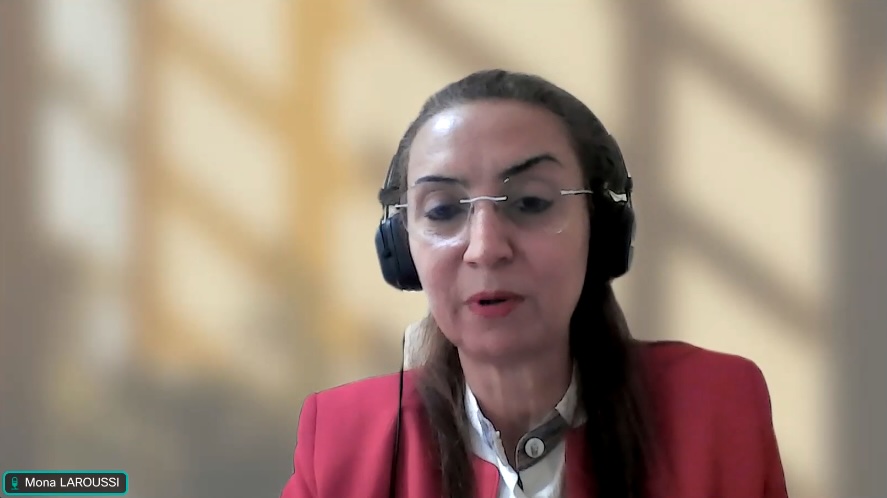
For Mona Laroussi, AI integration cannot be separated from local realities:
The digital divide and connectivity issues greatly complicate access.”
She also highlights difficulties in teacher training due to the rapid evolution of tools.
Beyond infrastructure, she questions pedagogical models:
Full personalization of learning raises questions. Students must also face real situations.”
She also advocates for oral assessments to better evaluate actual competencies.
Morocco bets on sovereignty and equity
Represented by Smail Kheraz, Morocco is pursuing an ambitious strategy focused on infrastructure and equal access:
We are investing in strong infrastructure to ensure the sovereignty of our data.”
To address territorial challenges, it is developing innovative solutions:
- offline classrooms
- tools accessible without internet
- development of national platforms
Key initiatives include:
- Jazari Program: data infrastructure for technological autonomy
- Offline classrooms: access without internet via local servers
- Zero Rating: free access to educational resources
A shared concern: avoiding greater inequality
Throughout the discussion, a consensus emerged: AI brings unprecedented opportunities but also significant risks:
- rising social inequalities
- technological dependency
- a misleading sense of time savings
All agree that AI must remain human-centered, guided by strong ethical principles and continuous training.
A collective transformation
Far from extreme positions, the conference outlined a middle path: thoughtful, contextualized, and gradual integration of AI.
A process requiring dialogue, local adaptation, and vigilance regarding social impacts.
A transformation that must remain human
Underlying all discussions is a shared conviction: AI should not dictate education but be integrated within a controlled framework.
As Eric Fourcaud summarized:
We’ve experienced several digital revolutions, but this one affects classrooms, teachers, and society all at once.”
He raises a central question:
What place should AI have in the classroom today?”
A global question requiring a collective answer—where ethics, training, and the human dimension remain fundamental pillars.More information
Frameworks and structured initiatives:
- In Quebec, the digital competency framework is being updated to include generative AI.
- In Morocco, the JawazTICE (digital passport) program, developed with UNESCO, certifies responsible technology use by teachers.
- IFEF has developed short micro-learning modules (1.5 to 2 hours) to enable rapid upskilling.
See: www.ludoviales.com